Concrete Paver Driveway Pricing Installation Guide for Value-Focused Builds
A driveway is one of those line items that seems simple until the numbers start moving around. Homeowners often begin with a rough idea, then discover that base depth, edge restraint, drainage, access, and pattern choice can swing the final total by thousands. If you are looking at concrete driveway pavers because you want something that performs well without lighting money on fire, it helps to understand where the cost really lives.
I have seen paver jobs come in beautifully on budget, and I have seen “cheap” bids turn into expensive repairs within two winters. The difference usually comes down to three things: matching the material to vehicle loads, building the base correctly for local soil and weather, and making honest apples-to-apples comparisons between pavers, poured concrete, and asphalt.
For value-focused builds, concrete driveway pavers often hit a sweet spot. They are not always the cheapest upfront, but they can make a lot of sense when you care about appearance, repairability, drainage options, and long-term service life. They also offer a wider range of looks than many people expect, from simple interlocking concrete paving stones in standard gray to textured driveway pavers with blended tones, tumbled edges, and stone-like finishes.
What concrete paver driveway pricing usually includes
When people ask for concrete paver driveway pricing, they usually mean the installed cost, not just the pavers. That installed price bundles several separate pieces of work, and each one matters.
A typical paver driveway installation cost includes demolition if an old driveway has to come out, driveway excavation costs, hauling away spoils, geotextile fabric where needed, aggregate base, bedding sand or a comparable screeded setting layer, the actual pavers, edge restraints, cuts, joint material, compaction, and cleanup. If the site has drainage issues, retaining edges, or transitions to garages and sidewalks, those details add labor and material too.
For a standard residential driveway in the U.S., driveway paver cost per square foot often lands somewhere around $18 to $35 installed for mainstream concrete products. In higher-cost labor markets or on complex sites, premium driveway pavers cost can push that figure to $35 to $50 per square foot or more. On the lower end, affordable driveway paving options may start around $14 to $18 per square foot, but that usually assumes straightforward access, a rectangular layout, no serious grading surprises, and a basic paver with minimal cutting.
That range is broad because paver driveway cost factors are broad. A 500 square foot straight driveway in flat, sandy soil is simply not the same job as an 850 square foot sloped driveway in clay with tree roots, poor drainage, and a tight side-yard access path for equipment.
The material itself is only part of the bill
Homeowners often focus on the visible surface and underestimate everything underneath it. On many jobs, the hidden layers and labor account for more of the budget than the pavers themselves.
Driveway paving material costs for standard concrete pavers might run roughly $4 to $10 per square foot for the units alone, depending on style, size, color blend, and local supply. That is just the start. Add bedding material, joint sand or polymeric sand, edge restraint, base stone, and delivery charges, and the surface package grows quickly. Then labor enters the picture.
Paver driveway labor cost is rarely light. Installing a true vehicle-rated driveway is not the same as laying a backyard patio. The crew has to excavate to the correct depth, compact the subgrade properly, place and compact aggregate in lifts, keep slopes consistent, and make sure the field stays tight during installation. A driveway needs to resist vehicle turning forces, not just foot traffic. That is why labor is a major slice of any driveway installation cost breakdown.
If you get a suspiciously low bid, ask what base depth is included and whether compaction is done in lifts. I have seen low-price proposals that looked attractive on paper but allowed only four inches of base where local conditions really called for six to ten. That shortcut does not always fail immediately. It often waits until paving contractors near me freeze-thaw cycles or repeated turning movements near the garage start loosening the pattern and creating dips.
Why base construction drives long-term value
If you care about paver driveway long term value, the base is everything. The pavers on top can be beautiful, dense, and well made, but a weak foundation turns even heavy duty driveway pavers into a headache.
Base depth depends on soil type, climate, drainage, and expected vehicle loads. For many residential driveways, a compacted aggregate base in the six to ten inch range is common, sometimes deeper in cold climates, expansive clay, or weak subgrades. Some installations need stabilization fabric or extra excavation and imported stone because native soil is too soft or poorly draining.
This is where driveway replacement budget planning gets real. Existing conditions drive cost more than brochure pricing ever will. If an old asphalt drive has failed because water is trapped underneath, simply placing pavers over a shallow rebuild may give you a prettier version of the same structural problem.
The upside is that a properly built paver system is repairable. If a utility line is accessed later or a section settles because of an isolated subgrade issue, the affected area can usually be lifted, corrected, and reset. That repairability is a big reason driveway paving return on investment often looks better over time than the cheapest initial bid suggests.
Choosing the right paver for cars, trucks, and turning loads
Not every paver sold in a landscape yard belongs in a driveway. Vehicle rated driveway pavers are designed to handle wheel loads and repeated stress, and they generally come with guidance on acceptable use. If you are planning a full driveway, ask directly whether the product is rated for vehicular applications, not just walkways.
Driveway paver thickness matters. For residential drives, concrete pavers around 2 3/8 inches, often referred to as 60 mm, are widely used and can perform very well when the base is correct. In heavier-duty applications, thicker units such as 80 mm may be specified. If you regularly park heavier pickups, loaded vans, or trailers, thicker heavy duty driveway pavers may be worth the extra cost.
Paver compressive strength and manufacturing quality also matter, although field performance depends on more than lab numbers. Well-made concrete pavers are dense and consistent. Good driveway paver durability comes from the combination of strong units, good edge restraint, tight joints, and a properly compacted base below. A paver with excellent compressive paver driveway resources strength still fails in practice if the installer leaves weak edges or skimps on compaction.
Pattern selection matters too. Interlocking concrete paving stones perform best when the pattern helps distribute loads. Herringbone is a favorite for driveways because it resists lateral movement better than simpler running bond layouts. It is not the only workable option, but there is a reason experienced installers keep returning to it for areas with vehicle traffic.
Concrete pavers versus brick and natural stone
Paver driveway material comparisons get interesting once you go beyond surface looks. Concrete driveway pavers, brick driveway paving, and natural stone driveway pavers all have their place, but they do not price and perform the same way.
Brick driveway paving has a classic look and can age beautifully. True clay brick pavers are often more expensive than standard concrete pavers, and brick driveway paving cost can be substantial if you choose premium products or detailed patterns. Brick also tends to offer a narrower style range than concrete, though for the right house that may be a strength rather than a limitation.
Natural stone driveway pavers can be stunning, especially on higher-end homes or rural properties where a more organic look fits the architecture. They also tend to sit at the top end of the budget. Stone selection, thickness, sourcing, and finishing all affect cost. Some stones are excellent under vehicle traffic, while others are better reserved for pedestrian use unless specially specified. Installation is often slower and more exacting than with modular concrete units, which increases labor.
Concrete pavers usually win the value argument because they provide broad driveway paver color options, consistent sizing, reliable availability, and a large menu of driveway paver surface finishes at more manageable price points. They can mimic stone textures, read as modern or traditional, and handle tight installation tolerances well. For many homeowners, they deliver the best balance of cost, performance, and design flexibility.
Permeable systems can solve expensive drainage problems
Permeable concrete pavers deserve serious attention if stormwater is an issue on your site. These systems are designed with joints or openings that allow water to pass through the surface into a specially built aggregate base below. In the right conditions, they can reduce runoff, ease puddling, and sometimes help with local drainage or zoning requirements.
They are not automatically cheaper. In fact, they often increase upfront cost because the base structure is more specialized and excavation may be deeper. But they can create value by reducing or avoiding separate drainage work. I have seen permeable systems make financial sense on tight urban lots where adding catch basins, drains, and outfalls would have been messy and expensive.
That said, permeable systems need appropriate soils, overflow planning, and maintenance. They are not a magic fix for every wet property. If clay soils drain poorly, the design may require underdrains or other engineering measures. A responsible contractor will talk through those details rather than selling the concept as a cure-all.
Texture, finish, and size affect both appearance and function
A lot of pricing conversations stay trapped at “How much per square foot?” without touching on function. Surface matters. Textured driveway pavers and slip resistant driveway pavers can be worth the premium, especially in wet climates, shaded sites, or sloped driveways.
Smooth surfaces can look sleek, but they may show tire marks more readily and can feel different underfoot when damp. More pronounced textures often improve traction and help hide everyday dust and wear. Driveway paver wear resistance varies by product line and finish, so if you are evaluating samples, ask how the surface is made and whether the color is full-body or concentrated near the face.
Large format driveway pavers have become more popular, especially on modern homes. They create a clean, architectural look, but they need careful handling and layout planning. In some cases, large units can be less forgiving of uneven support or tighter turning stresses, depending on product design and pattern. Small format paving stones are often more adaptable, easier to interlock effectively, and simpler to repair. Neither is inherently “better.” It depends on the driveway geometry and how you use the space.
Driveway paver color options can also influence long-term satisfaction more than initial cost. Dark charcoal looks sharp but may show efflorescence, dust, and deicing residue more visibly. Very light pavers can reduce heat absorption but may show tire scuffing. Blended mid-tone colors often hide everyday wear best. For value-focused builds, practical color selection is underrated.
Weather, freeze-thaw, and climate exposure
Weather resistant driveway pavers are especially important in climates with hard winters or strong sun exposure. Freeze-thaw durability matters because water gets into every pavement system one way or another. The goal is to use materials and construction methods that tolerate that moisture and movement.
In snowy regions, I tend to favor proven products with a good local track record rather than chasing the newest finish because it looks fashionable on a showroom panel. Ask what has been used in your area for ten or fifteen years. Local experience is worth a lot. A paver that performs beautifully in a mild climate may not behave the same way where salt, plow blades, and repeated freezing are part of life.
Driveway paver durability also depends on maintenance habits. Poor snow removal technique can chip edges. Harsh chemicals can stain or weaken surfaces. That does not mean pavers are fragile, just that they reward reasonable care. Fortunately, maintenance is usually straightforward.
What maintenance really costs over time
Driveway maintenance expenses for pavers are often predictable. Most owners will need occasional joint sand replenishment, especially after years of weather or pressure washing. Weeds can appear if joints are neglected, though they are usually a maintenance issue rather than a paver failure. Sealing is optional in many cases, not mandatory, though some people choose it to enrich color or reduce staining.
One of the strongest arguments in favor of pavers is spot repair. If a section settles or gets stained beyond recovery, individual areas can be reset or replaced. Compare that with poured concrete, where one crack can turn into a replacement discussion because patching is hard to hide.
When people talk about driveway paver lifecycle cost, this is what they mean. Initial cost may be higher than asphalt and paver driveway installation service often higher than a basic broom-finished slab, but the system can age more gracefully and can be repaired in pieces instead of as a monolith. That changes the math over fifteen to thirty years.
Pavers versus concrete and asphalt
Paver driveway versus concrete cost is one of the most common comparisons. A poured concrete driveway is often cheaper upfront, especially if the shape is simple and the finish is standard. In many markets, basic concrete may come in at a noticeably lower installed price than pavers. Decorative concrete, stamped concrete, and heavily reinforced slabs can close that gap, sometimes more than people expect.
Where pavers often pull ahead is aesthetics, repairability, and resistance to random cracking. Concrete cracks. It is a question of where and when, not if. Good jointing and proper base work help, but slabs still develop cracks over time. Pavers, by design, allow a degree of movement across many small units.
Paver driveway versus asphalt cost usually shows a larger upfront difference. Asphalt is frequently cheaper to install initially, making it attractive for strict short-term budgets. But asphalt usually needs more routine resurfacing and has a different visual character. On a modest suburban home, asphalt can be perfectly practical. On a custom home or a property where curb appeal matters, concrete pavers tend to offer more visual value and a stronger impression at resale.
If you are weighing bids, compare service life expectations, maintenance cycles, and repair scenarios, not just first-day pricing. That is where paver driveway long term value often becomes clearer.
How to read driveway paving estimates without getting burned
Driveway paving estimates are not all built the same. A value-focused homeowner should look for detail, not just a final number. If a proposal is vague, ask questions until it stops being vague.
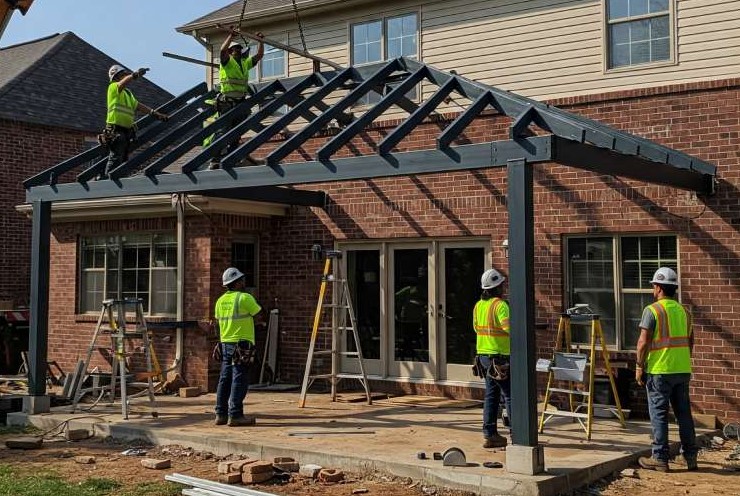
A solid estimate should clarify excavation depth, base depth, type of aggregate, compaction method, paver brand or line, paver thickness, edge restraint approach, joint material, drainage work, and what happens at the garage threshold and street connection. It should also explain whether demolition, haul-off, and permit costs are included. Those are the pieces that make paver driveway project budgeting realistic.
This is one area where the lowest number can be a trap. Two bids can differ by $6 to $10 per square foot and both technically be “for pavers,” yet they may represent very different levels of structure below grade. One may be pricing a long-lasting driveway, the other a nice-looking surface with hidden shortcuts.
A sample budget range for a typical residential driveway
Let’s take a practical example. Suppose you have a 600 square foot driveway and want a straightforward concrete paver installation with no major retaining work. In many markets, a realistic installed budget could fall somewhere around $11,000 to $21,000, with premium selections or difficult site conditions pushing beyond that.
At the lower end of that range, you might be looking at standard interlocking concrete paving stones, simple edge treatment, good access for equipment, and limited cuts. In the middle, perhaps around $15,000 to $18,000, you could often step into better color blends, a more refined texture, and stronger detailing at borders and transitions. At the upper end, large format driveway pavers, permeable concrete pavers, difficult access, extensive grading corrections, or deep excavation in poor soils can move the total much higher.
That is why concrete paver driveway pricing works best when framed as a system price, not just a unit price. It keeps the focus where it belongs, on a driveway that will carry cars well and look right for the house.
Where the best value usually shows up
For most homeowners, the best value is not the cheapest paver on the pallet and not the most expensive showroom sample either. It is usually a mid-range concrete paver with proven vehicle performance, a practical color blend, decent texture, and a contractor who takes the base seriously.
I tend to like products that balance appearance with function. Medium tones hide wear. Slip resistant driveway pavers make sense on slopes. A classic interlocking pattern resists movement. A thickness appropriate for the expected load gives peace of mind. None paver driveway design ideas of that feels flashy when you are shopping, but those choices age well.
If your budget is tight, trim complexity before you trim structure. Skip the elaborate border if needed. Choose a standard shape instead of a custom pattern. Save money on visual extras before you reduce base depth or settle for non-vehicle-rated units. That is how value-focused builds stay value-focused years later, not just on installation day.
A paver driveway can absolutely be a smart investment. The key is knowing where to spend, where to simplify, and how to judge a bid on more than the surface you can see.